H.R. Waller
Date: 21 September, 2008
Time: 1500
Location: Between Collins and Olin, once more
Weather: Sprinkling, Cloudy, 61 degrees.
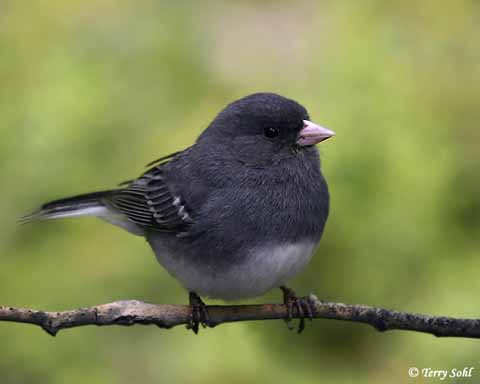
This area is simply too interesting to only spend one entry on! Thus, I am back again. There is a short, but wide tree on the Olin side of the side walk that has lots of obling leaves, but also has very strange looking vine things hanging down off of its branches, along with clusters of little unappetizing berries. I have never seen a tree like this one before. It appears as thought little birds have been feeding on the berries, yet there is still a plethora of berries left. This is the tree that the Dark Eyed Junco hopped to and looked like he was playing on a jungle gym, with all its scattered and random branches shooting out everywhere with plenty of leaves and vines to hide its occupants. On the ground right near this tree is a cute little shrub that looks like a smashed, and short pine tree, only 2 feet in diameter. It has needles and many branches. No two plants in this area are the same. It is a naturalist observer's paradise.
Sunday, September 21, 2008

Little trees

H. R. Waller
Date: 21 September, 2008
Time: 1029
Location: Again between Collins and Olin
Weather: cooler, 60 degrees, drizzly
I decided to revisit this location, since last time I focused mainly on the little bird who was using the area as his playground. However, the vast array of unique types of flora scattered all about are quite interesting as well, and worthy of observation. It is a shame that this area is so hidden and unobserved by most people. I just happened to stumble upon it, but it is in such a location that no one would have a need to go back there, yet it is a fascinating location, and with a few chairs or benches, would be an optimal meeting or studying location. Most of the trees back here are rather short. I'm wondering if that's because they are more newly planted, or because whoever decided what would be planted thought it would be better to keep with the seeming theme of hidden-ness and keep the plants low key. One tree in particular is pleasing to look at because it looks like a pine tree, only in miniature proportions. Everything from its height to its needles are smaller and less intimidating to little people such as myself.
Date: 19 September, 2008
Time: 0918
Location: Between Collins and Olin, on the sides of the buildings near the bridge overhead.
Weather: Overcast, calm, 58 degrees.
I went to sit on the woodchips off of the sidewalk to write about the huge diversity of plant life present in this semi-hidden area, but then I spotted a far more interesting object: a tiny little black bird with whote undersides of his wings. He darted around bvery quickly, jumping form moss patch to moss patch. When I cam to sit, he eyed me nervously as if I had caught him misbehaving. He then flew in a very rapid, noiseless manner to a strange looking tree that is very low to the ground. I immediately wanted to know more about this little fledgling. He was very slender and elegant looking. Upon researching on the web, I concluded that it is likely he was a Dark Eyed Junco.
Friday, September 12, 2008
H.R. Waller
10 September
1430
Journal
Today is another perfectly cloudless day and the sun is beating down on a pleasant 78 degree afternoon. I’m seated on the bank of the Mill Race between the library and Rogers music hall on campus. There is a small cloud of gnats buzzing wildly around each other in front of me. As I look out on to the river I notice several more of these tiny bugs. However, the majorityare not in clusters like this one. Are they looking for food? Do they like the hot weather or are they anxiously awaiting a cooler break? I’m currently seated in the shade of a tall and very “clean” looking tree whose trunk is just big enough that I can’t get my arms around it. The bark is a light reddish brown color with several white spots all over and on the branches as well. It appears as if someone splattered it with bleach. This tree has a plethora of appendages going off in every direction and many leaf clusters with large green leaves that look like maple leaves. This tree looks very confident and at peace with itself compared to some of the smaller and less perfect looking vegetation surrounding it. Also, directly next to it is a small shrub growing up from the ground no more than 1 and a half feet tall. Its branches are spread all over in a messy fashion, and 3 spider webs inhabit its crevasses The leaves are oblong and arranged randomly at the end of each branch. Also there are many brown and dry spots indicting a less healthy life. Is the tree hogging the nutrients? Or is the shrub trying to mooch off the tree?
H.R. Waller
11 September 2008.
1055
Journal
I’m sitting in the 74 degree weather on a sunny morning by the Mill Race facing toward the library with Goudy behind me. I’m in the shade of a beautiful branching tree, my back leaning against its sturdy trunk. The bark is a clean white color with little patches of brown underneath in places where the white wrapping has come away. It reminds me of a Christmas present all wrapped up that someone has tried to peek at only to find that beneath the paper is a plain cardboard box. The leaves are heart shaped and arranged randomly, but thickly around the branches. This is a pretty tall tree and there are 3 more like it in various spots around the river. To my right, directly opposite the UC is a large bed of various plants and flowers. One type that caught my eye right away were the 4 foot tall red ones whose stems are as thick as a pencil and whose leaves are very skinny and oblong and travel all the way up to the last 6 inches of the stem where the brilliant red buds the shape of bluebells begin and finish off the top. These were obviously planted there deliberately as can be inferred from their neat and ideally situated arrangement. Next to them is a group of similar looking plants that have purple flowers in the place of the red, but rather than having about 10-15 flowers on each stalk, these have 5 slightly larger ones in the more typical 5 petal flower shape. Neither flower is found in Audubon, but the red one resembles a fireweed, though I know it is not. Across from me on the other bank is a big group of ducks all huddled down appearing to be asleep in the shade. A few are standing up. Can they sleep standing? There is a perfect row of 5 trees almost twice as tall as Smith, the building behind them. The trees look like Western Red Cedars, with huge buttressed trunks and flat, drooping needles providing perfect shade.
11 September, 2008
1649
Journal
I’m sitting outside of Kaneko in the 88 degree sunshine on a concrete bench facing the bridge. I notice a strange type of bush-like shrub that I have never seen before. They are lined up perfectly, 5 in a row. They are manicured and planted, mixed with two taller, full leafy trees. The shrubs are comprised if many stalks that start out as 3/8 inch thick stick like material at the bottom and reach up and all over in various directions, eventually transforming into a leathery consistancy that feels waxy to the touch and has oblong leaves that are the size of a pencil eraser. It is not found in Audubon probably because it was not naturally in place, and maybe uncommon to be found unintentionally in nature. There is a bee buzzing busily from flower to flower on the stereotypical garden flowers of red and white. How do they extract nectar? How far is a bee willing to travel from its hive to find nectar?
10 September
1430
Journal
Today is another perfectly cloudless day and the sun is beating down on a pleasant 78 degree afternoon. I’m seated on the bank of the Mill Race between the library and Rogers music hall on campus. There is a small cloud of gnats buzzing wildly around each other in front of me. As I look out on to the river I notice several more of these tiny bugs. However, the majorityare not in clusters like this one. Are they looking for food? Do they like the hot weather or are they anxiously awaiting a cooler break? I’m currently seated in the shade of a tall and very “clean” looking tree whose trunk is just big enough that I can’t get my arms around it. The bark is a light reddish brown color with several white spots all over and on the branches as well. It appears as if someone splattered it with bleach. This tree has a plethora of appendages going off in every direction and many leaf clusters with large green leaves that look like maple leaves. This tree looks very confident and at peace with itself compared to some of the smaller and less perfect looking vegetation surrounding it. Also, directly next to it is a small shrub growing up from the ground no more than 1 and a half feet tall. Its branches are spread all over in a messy fashion, and 3 spider webs inhabit its crevasses The leaves are oblong and arranged randomly at the end of each branch. Also there are many brown and dry spots indicting a less healthy life. Is the tree hogging the nutrients? Or is the shrub trying to mooch off the tree?
H.R. Waller
11 September 2008.
1055
Journal
I’m sitting in the 74 degree weather on a sunny morning by the Mill Race facing toward the library with Goudy behind me. I’m in the shade of a beautiful branching tree, my back leaning against its sturdy trunk. The bark is a clean white color with little patches of brown underneath in places where the white wrapping has come away. It reminds me of a Christmas present all wrapped up that someone has tried to peek at only to find that beneath the paper is a plain cardboard box. The leaves are heart shaped and arranged randomly, but thickly around the branches. This is a pretty tall tree and there are 3 more like it in various spots around the river. To my right, directly opposite the UC is a large bed of various plants and flowers. One type that caught my eye right away were the 4 foot tall red ones whose stems are as thick as a pencil and whose leaves are very skinny and oblong and travel all the way up to the last 6 inches of the stem where the brilliant red buds the shape of bluebells begin and finish off the top. These were obviously planted there deliberately as can be inferred from their neat and ideally situated arrangement. Next to them is a group of similar looking plants that have purple flowers in the place of the red, but rather than having about 10-15 flowers on each stalk, these have 5 slightly larger ones in the more typical 5 petal flower shape. Neither flower is found in Audubon, but the red one resembles a fireweed, though I know it is not. Across from me on the other bank is a big group of ducks all huddled down appearing to be asleep in the shade. A few are standing up. Can they sleep standing? There is a perfect row of 5 trees almost twice as tall as Smith, the building behind them. The trees look like Western Red Cedars, with huge buttressed trunks and flat, drooping needles providing perfect shade.
11 September, 2008
1649
Journal
I’m sitting outside of Kaneko in the 88 degree sunshine on a concrete bench facing the bridge. I notice a strange type of bush-like shrub that I have never seen before. They are lined up perfectly, 5 in a row. They are manicured and planted, mixed with two taller, full leafy trees. The shrubs are comprised if many stalks that start out as 3/8 inch thick stick like material at the bottom and reach up and all over in various directions, eventually transforming into a leathery consistancy that feels waxy to the touch and has oblong leaves that are the size of a pencil eraser. It is not found in Audubon probably because it was not naturally in place, and maybe uncommon to be found unintentionally in nature. There is a bee buzzing busily from flower to flower on the stereotypical garden flowers of red and white. How do they extract nectar? How far is a bee willing to travel from its hive to find nectar?
Subscribe to:
Posts (Atom)